A campaign for peat-free futures rooted in justice
Peatland Justice is an artistic campaign led by RE-PEAT. It is a co-creative, narrative-shifting initiative that seeks to expose and transform peatland injustices.
Join the team!
We’re currently looking for new Netherlands-based team members to join RE-PEAT NL and co-organise creative actions for peat-free horticulture! Read the full call-out here.
Deadline: Sept 6th


Campaign Achievements
Reach & Engagement
80,000+ people engaged across online platforms, events, workshops, exhibitions, and community activities
60,000+ people reached online, with major growth across Instagram, LinkedIn, website traffic, and podcast listeners
Successful launch of RE-PEAT Community newsletter and Echoes from the Bog podcast
Educational Outputs
We created a wide range of free, accessible peatland resources, including:
3 zines on peatlands, bog bodies, and an a-z peatland dictionary
5 educational videos on the peat cycle in the potting soil industry
Podcast series exploring restoration, storytelling, and stewardship
Newsletter with research, reflections, and campaign updates
Campaign posters and dozens of social media explainers
Collaborations & Partnerships
Worked with 35+ partners across 9 countries
Partnerships spanned cultural institutions, environmental NGOs, grassroots groups, research networks, and governmental bodies
Events & Community Programming
Delivered workshops, exhibitions, community dinners, linoprinting sessions, talks, field trips, and public actions
Engaged diverse audiences — youth, artists, farmers, researchers, policymakers, students, and community organisers
Why Peatland Justice?
Peatlands are being destroyed at an alarming rate—largely to supply the horticultural industry with peat-based potting soils. 80% of global peat extraction happens in Europe, causing the highest emissions per hectare of any land use.
At the heart of this crisis are two major drivers:
TRADE
Peat extraction for horticulture fuels large-scale environmental destruction. Peat is often extracted to be shipped beyond its origin country.

finance
Peatland degradation is embedded in economic systems that prioritise profit over people and ecosystems. A just financial framework is needed to change that.
Mapping the Story of Peat
We want to shift the narratives around peatlands, deepening public understanding and reconnection with peatlands. That’s why we created a range of workshops, communication materials and pieces for our Deep Map exhibition that layer stories and facts. Together, these pieces show the situation of peatland (in)justice and invite you to become part of the conversation and get into action.
Read more about the exhibition!


Turning stories into action: targeting retailers in the Netherlands
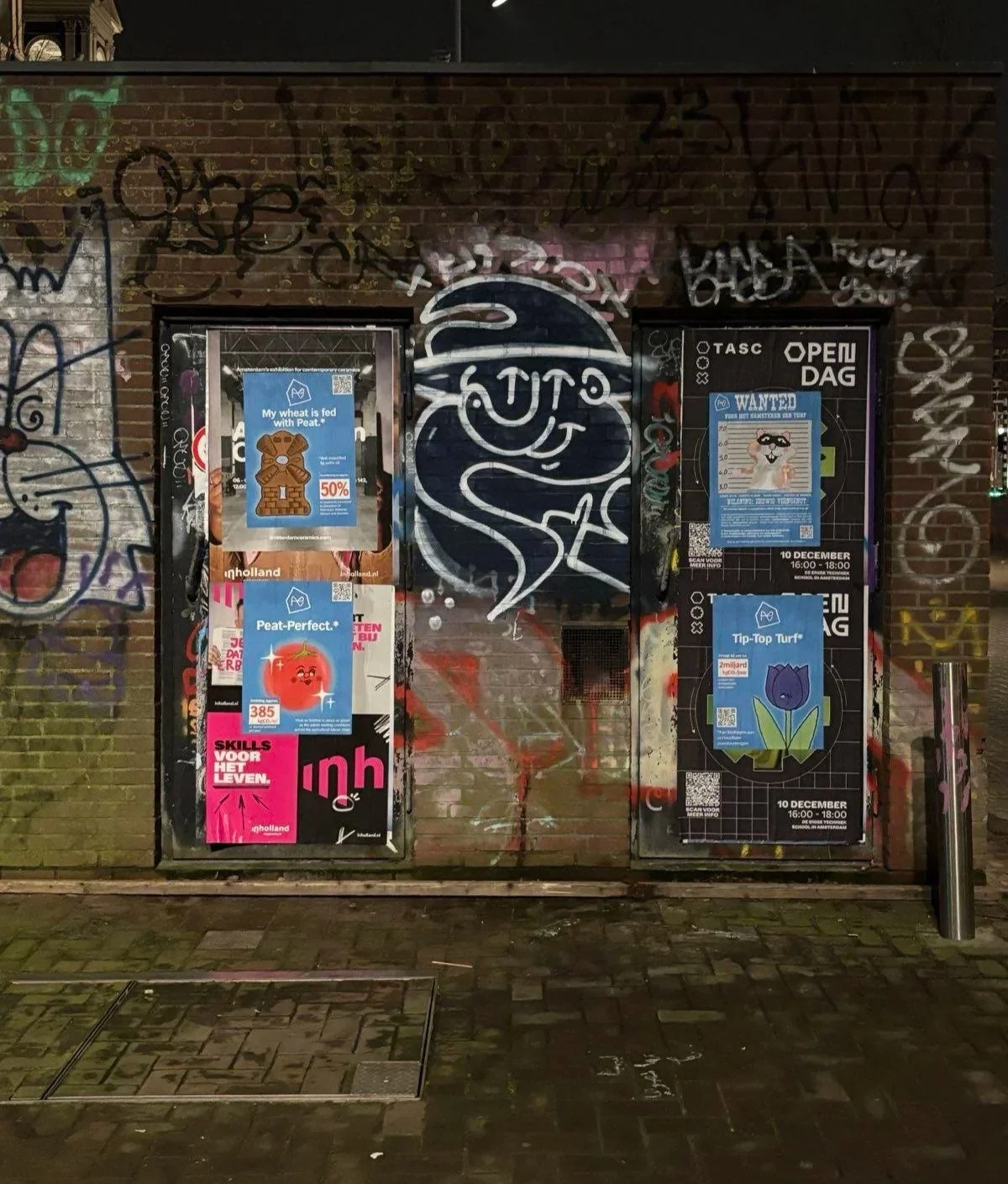
Building on the stories, we now turn to action. We are honing in on retailers - the public-facing link in the peat supply chain. We are taking on retailers in the Netherlands specifically, as this country is the largest peat importer in the whole of Europe. With our actions and activities, we push them to act on their responsibility in peatland destruction and go fully peat-free.
Concretely, we are targeting Albert Heijn, the country’s largest and most powerful supermarket. In order to do this work in a way that is rooted in local context, we have set up a new local volunteer group: RE-PEAT Netherlands. Find the new campaign webpage of this group here.
We work in collaboration with other groups such as Turfvrij, Toekomstboeren and the Agroecology Network to push for a truly just transition away from peat, towards a horticultural system that is free of any type of exploitation.

Following the money
Peatland justice and money flows are tightly intertwined - for good and bad.
Under capitalism, peatland protection and restoration often only move forward when they are financially incentivised or made profitable. While funding is crucial to safeguard and restore these landscapes, we are cautious of big capital benefiting from peatlands without driving real system change and re-distribution of wealth.
In our exploration of peatland financing, we ask: how can funding for peatlands be done in a truly just way? We take a critical look at both the potential and the pitfalls of financial mechanisms such as community buyouts, carbon credits, offsetting schemes, and restoration finance initiatives.
Want to stay updated?


We are proud to collaborate with: Wetlands International-European Association, Climate Catalyst and Transnational Institute.


Peatland Justice is made possible with the generous support of Allianz Foundation, Andrea von Braun Foundation, Lush, Patagonia, the Collective Imagination Practice Community, and the Landscape Research Group.






Andrea von Braun Stiftung

Sign up to our newsletter!