Peatland restoration and why communities matter
An insight into livelihoods that show why peatland restoration depends on the communities connected to them…
Listen to the related podcast episode here, which includes the interviews explored in this article.
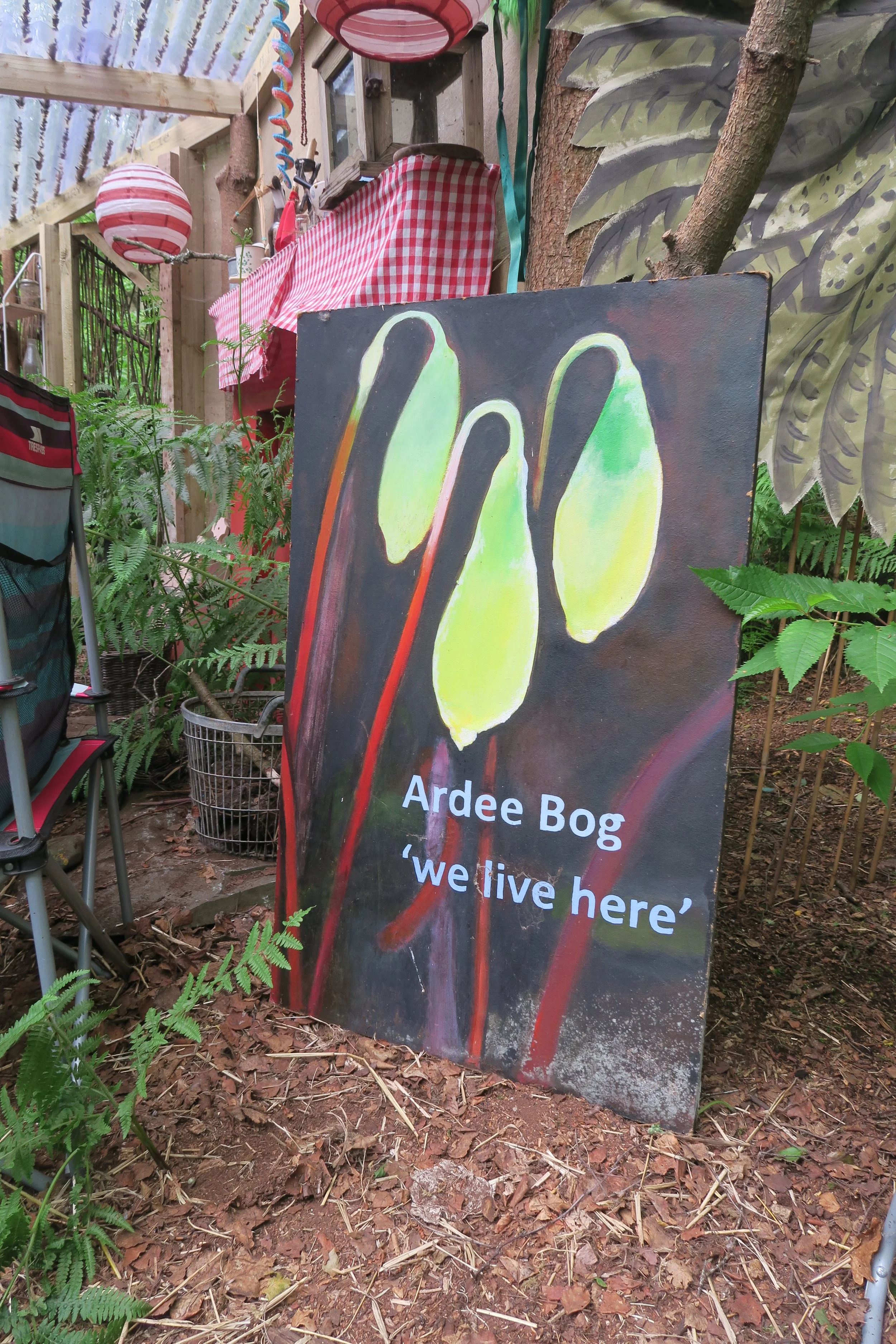
Photo by Holly Bartley at Ardee Bog
Formed over thousands of years from slowly decomposing plant material, peatlands store twice as much carbon as all the world’s forests combined, regulate water flows, support specific biodiversity, and hold deep cultural meaning for the people and beings who live beside them.
Yet these landscapes are also among the most altered by human activity. Centuries of drainage for agriculture, turf-cutting, plantation forestry, and development have left vast areas degraded. As a result, many peatlands now release carbon instead of storing it, lose biodiversity, and become increasingly vulnerable to fire and flooding.
In our podcast episode Are You Also Confused About Peatland Restoration?, we explored the broader topic of nature restoration and what it means for peatlands. This article builds on that conversation, and the recent podcast focusing on peatland restoration as both an ecological and a social process and on why lasting recovery is inseparable from the communities connected to these landscapes.
Restoring peatlands often starts with rewetting drained soils, blocking drains and raising the water table. Across Europe, a growing movement is experimenting with community involvement, new fair land-use models for landowners, and shared stewardship as pathways to protect threatened peatlands.
These approaches recognise peatlands as living landscapes shaped by human histories and argue for futures grounded in care, justice, and shared stewardship. While involving the people who know these landscapes best, including farmers whose livelihoods are tied to wetlands, communities with cultural and emotional relationships to peatlands, and local groups with a long-standing commitment to place.
To explore how this plays out on the ground, we spoke with three people working in different manners in this movement that we recorded and shared on our latest podcast:
Doug McMillan of Green Restoration Ireland, who supports farmers in transitioning to wet agriculture
Fiona Crawley of Friends of Ardee Bog in Ireland, part of a grassroots effort to protect and restore a threatened peatland
Kerry Morrison, socioecological artist from the Crichton Carbon Centre in Scotland, whose work bridges restoration science and creative community participation
Together, their perspectives show how people and peatlands are deeply interconnected and mutually essential to restoration.
supporting farmers through transition
This section is based on Interview 1: Doug McMillan, Green Restoration Ireland
Doug manages and supports farmers paludiculture farms gradually emerging across Ireland. For many farmers, drained cut-over bogs have become unproductive. “There’s no income,” he explains, “they don’t get any income from this. There’s no funding to do anything with it.”
Increasingly, european countries are exploring paludiculture, “wetter agriculture” that allows farming to continue on restored soil. As Doug explained, their work has shifted from “more classic conservation” to “bridging the gap… between conservation practices and farming needs.”
Paludiculture offers alternatives, growing crops like reed canary grass, cattails or bog berries on rewetted peat. But transition requires fair compensation, technical support, and long-term security. As Doug puts it, farmers need “the long-term business opportunities… that income to stay on the farm.”
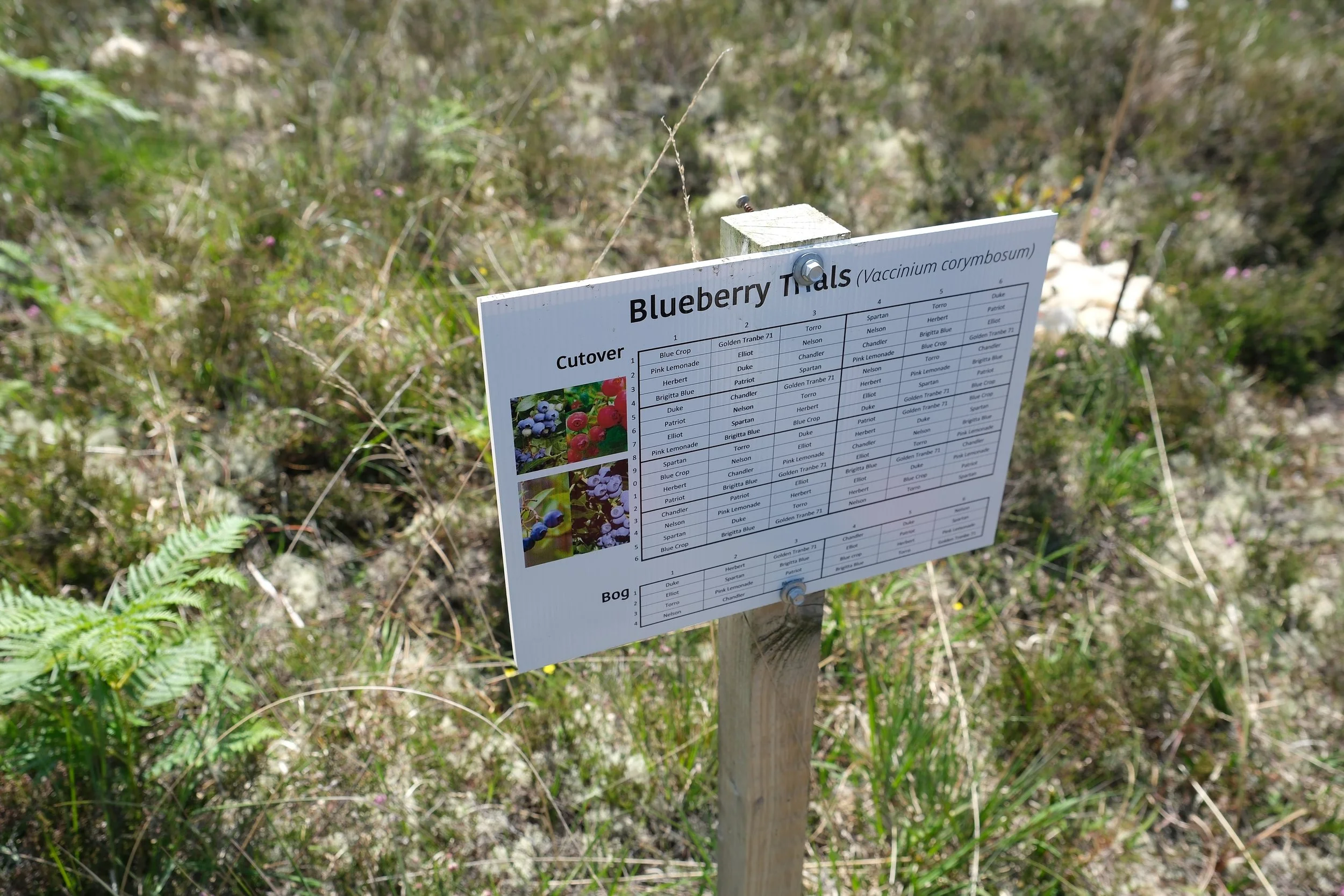
Photos by Frankie Turk at Regan’s paludiculture farm
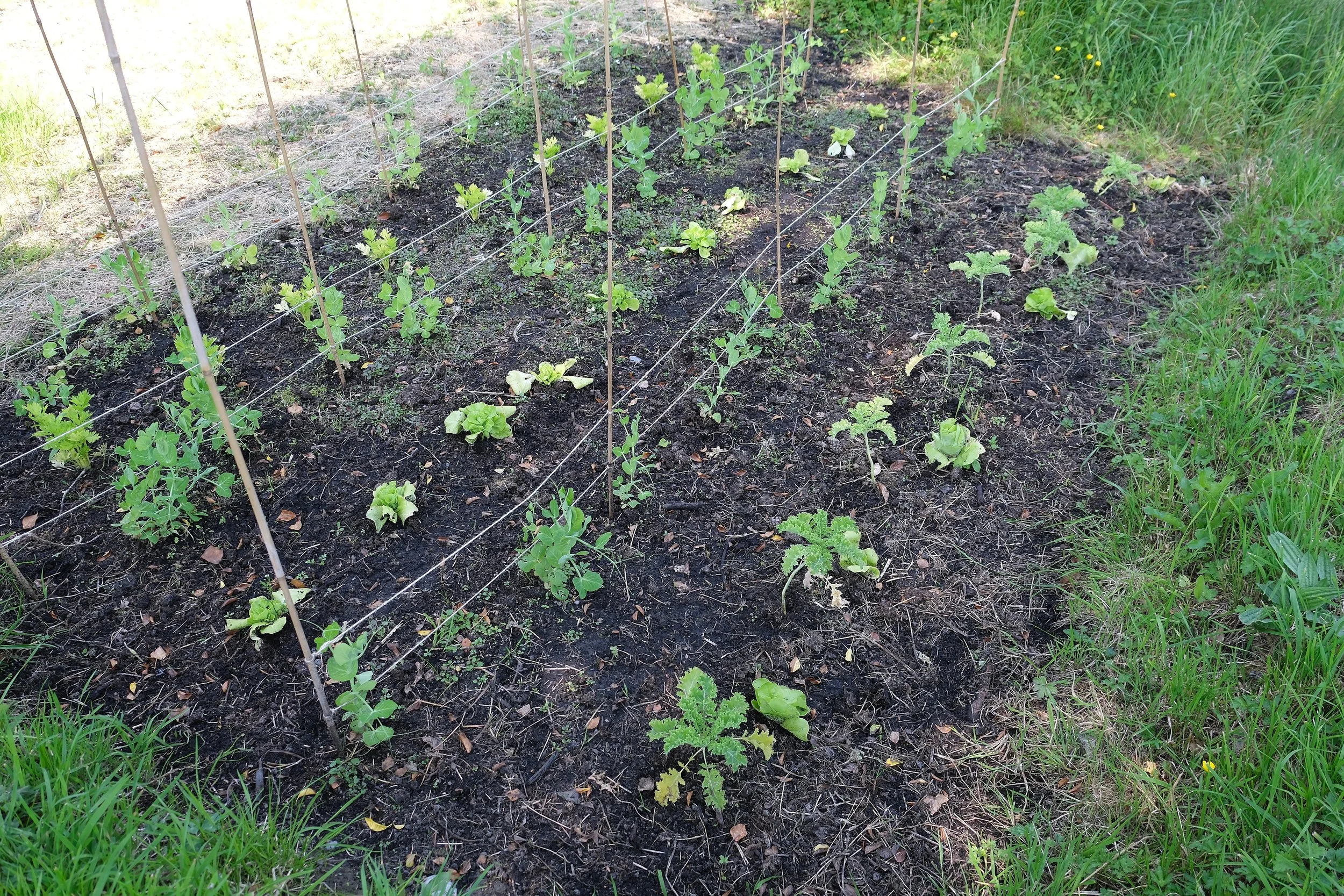
Vegetables growing on rewetted peat
Restoration also raises questions of justice. Doug is clear: justice means “that the people that own the land get the income from it.” He warns against “carbon colonialism, where you get big companies buying up big blocks of peat… and claiming the carbon credits.” Instead, he sees real potential in farmer-led cooperatives and local processing enterprises, ways to keep benefits within rural communities.
Community empowerment and land protection
This section is based on Interview 2: Fiona Crawley from Friends of Ardee Bog
In Ardee, County Louth, community members are fighting for the survival of a fragmented, threatened bog. Fiona describes Friends of Ardee Bog as a group that came together “quite by accident,” united by a love for the peatland. Their situation is unique: “Our bog doesn’t have any protected structures… it is a proposed national heritage area.” With acres of peatland owned by private landowners, and surrounded by heavily drained farmland, restoration is challenging and slow.
“It’s a mosaic now, we will not be able to restore all of Ardee Bog because… so much of it does not exist.”
Yet the group is deeply motivated by connection and care. Fiona emphasises the role of shared experience:
The group organises hydrology studies, community days, simple shelters on the bog, and workshops. “It’s when it’s shared over food,” Fiona reflects, “we find it’s very meaningful and very open.”
Justice also has a personal dimension for her. Fiona once cut turf herself: “It was independence for me… but when I learned how important bog was, I stopped cutting and I’m glad I’ve stopped.” She highlights the reality that many neighbours still rely on turf, arguing that “a little bit of the just transition” must reach the east coast, where landowners are “annoyed with the peatland” and struggling with wet grassland.
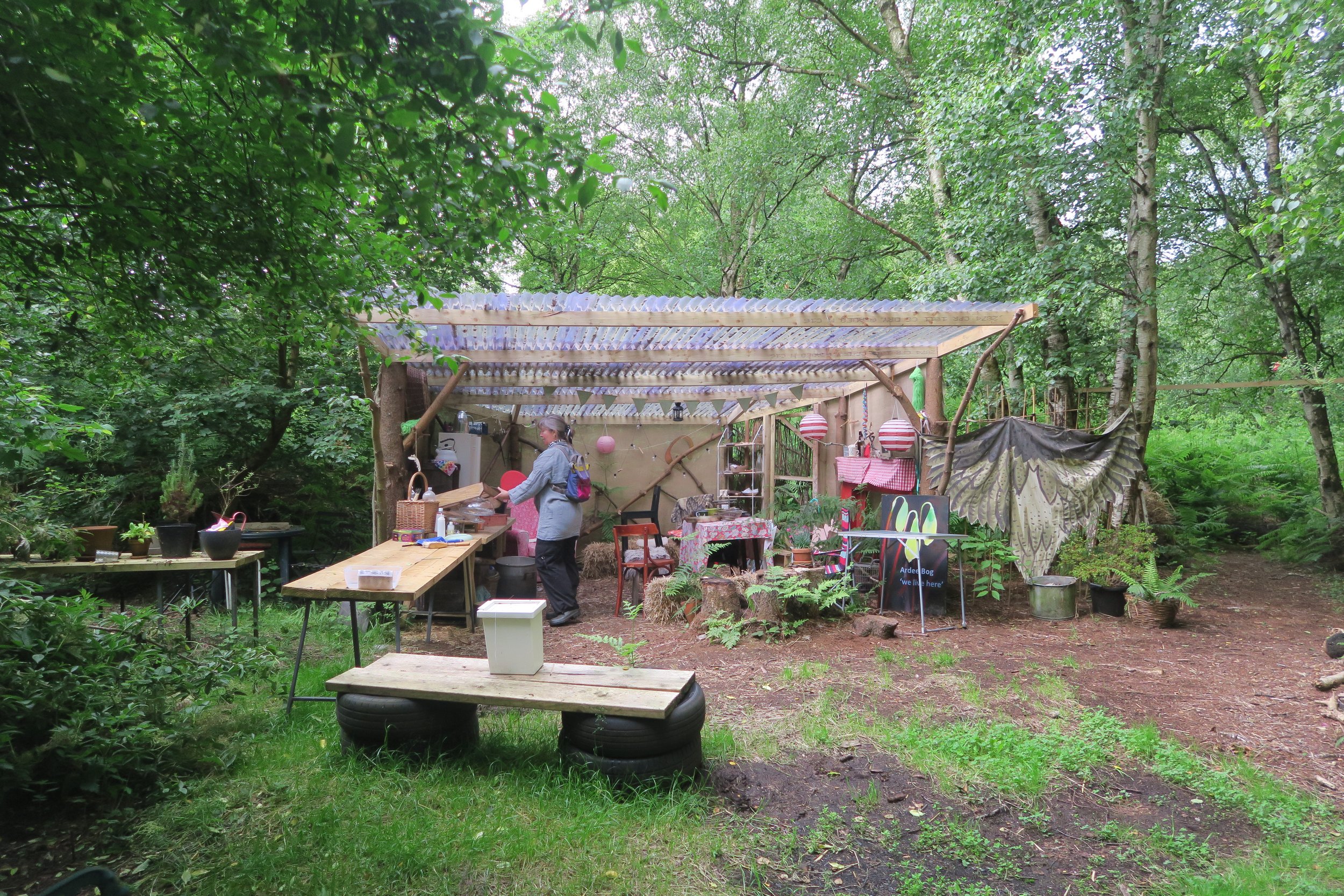
Photo by Holly of Fiona on her land at Ardee Bog
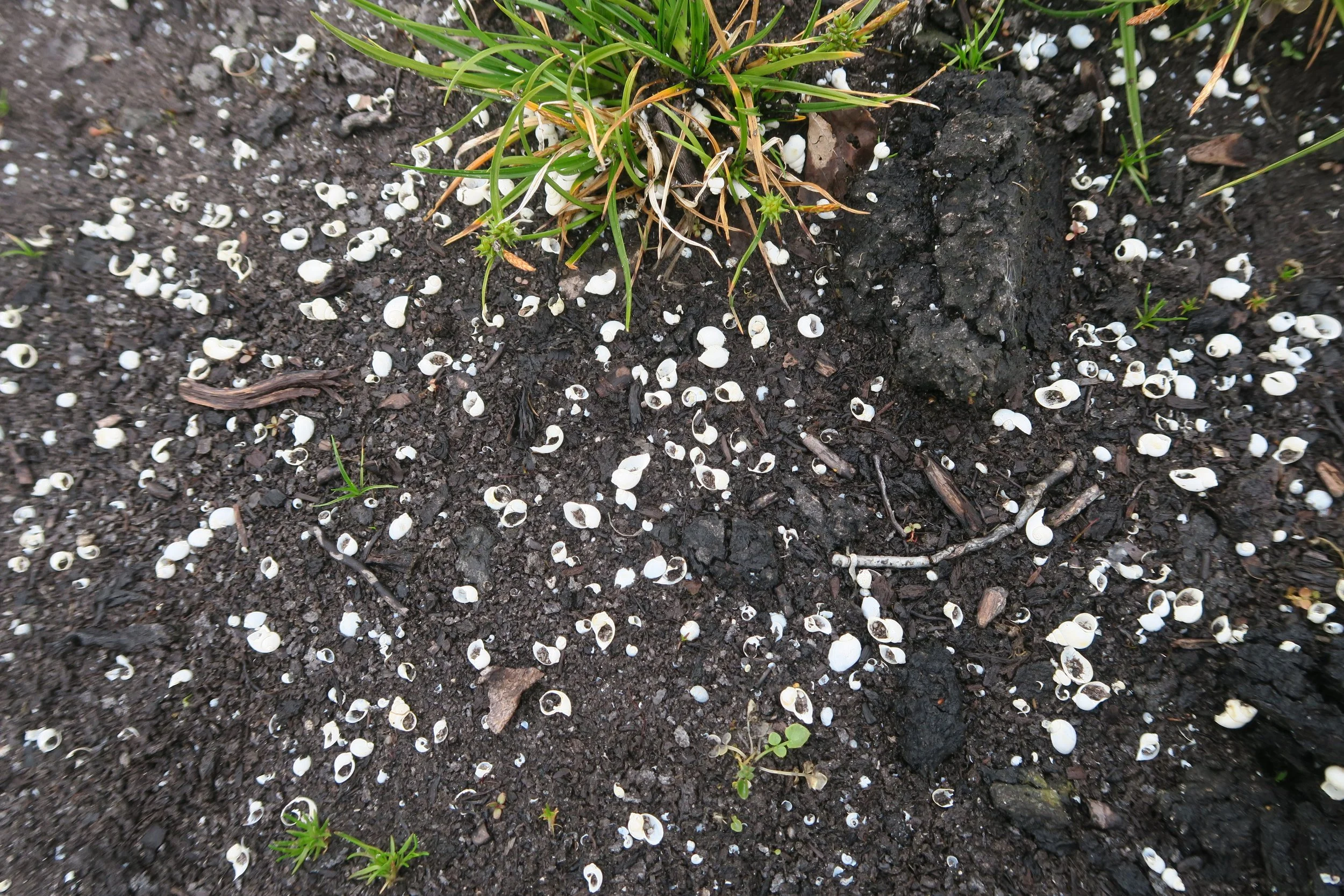
Degraded peat showing thousands of years old shells
A vision of restoration
This section is based on Interview 3: Kerry Morrison, socioecological artist, Crichton Carbon Centre
Galloway in Scotland is a peaty place, with blanket bogs in the uplands and raised bogs in lower areas. Socio-ecological artist Kerry Morrison works at the Crichton Carbon Centre (CCC), an environmental organisation dedicated to peatland restoration work. At CCC there is a team dedicated to restoring degraded bogs peatlands: Team Peat. Team Peat’s restoration work involves many restoration methods including blocking artificial drains to stop water flowing off the peatland, and monitoring the water table and plant recovery. Fortunately some areas revive quickly; at Moss of Cree, for example "the vegetation has come back pretty much of its own accord … the seed bank is in the peat”.
Team Peat’s work is physically demanding: “My colleagues are super fit and super strong” she says, “and accessing sites is a struggle - even for most able-bodied people.” As a result, direct access to peatlands is limited for many people, which restricts opportunities for lived experience and knowledge sharing and highlights the need for alternative ways to reach people and spread awareness.
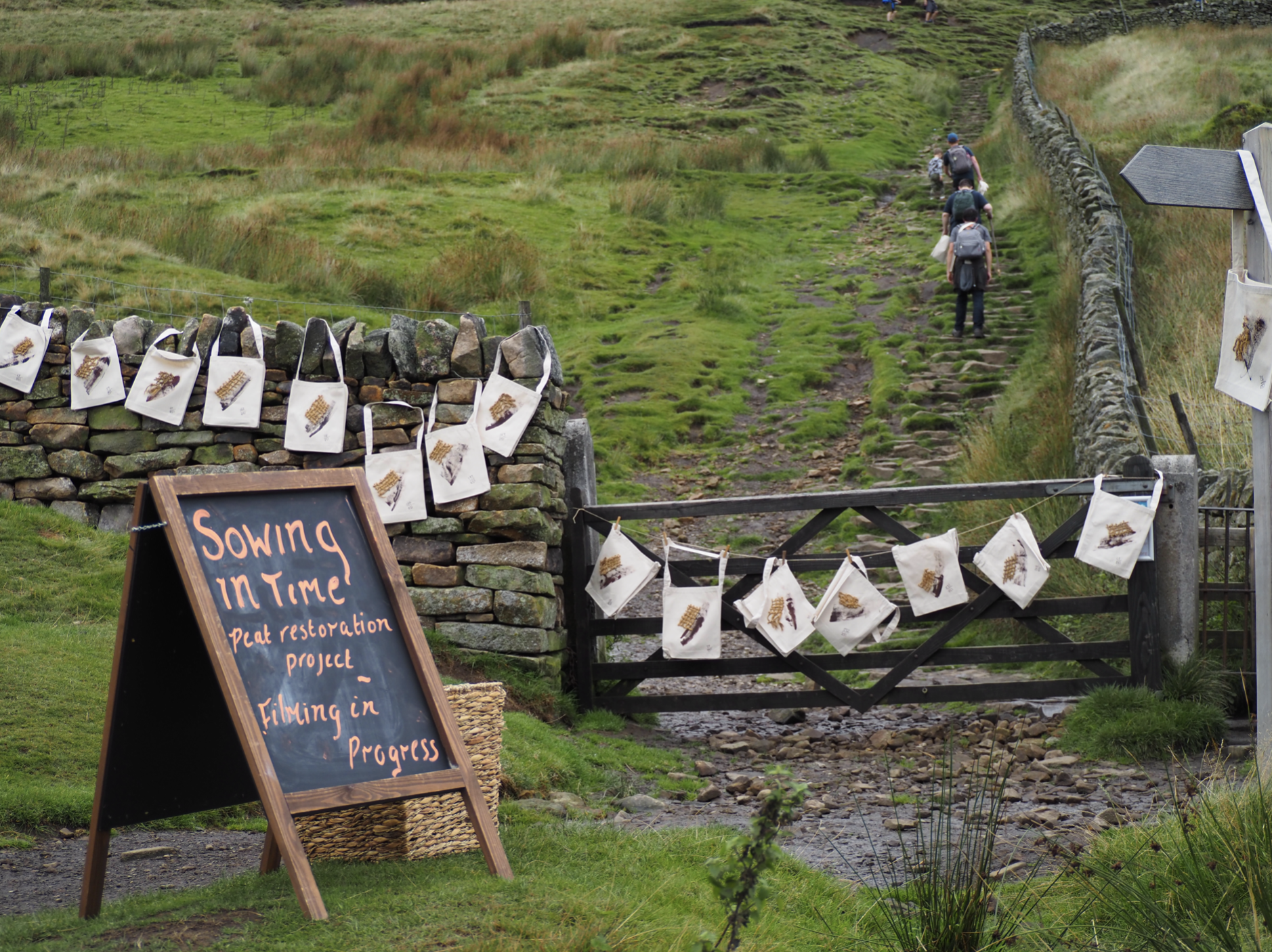
Kerry explains her process and key learnings in the podcast. One of her projects weaves creativity into ecological monitoring. She is exploring how else a site can be monitored “beyond scientific methods like dip-wells and quadrats surveys.” The image below shows one of her earlier projects involving local people in hands-on action during their walks up Pendle Hill, combining observation with seed planting. The Carbon Centre hopes to build a ten-year community program combining science and creativity into ‘citizen art’ - ideas are still in development to make peatlands accessible to wider audiences.
For Kerry, community connection begins with being present. She mentions a description of her method “as deep hanging out” - a social science term perfectly suited to her creative process which involves a lot of chatting to people and listening to what matters to them.
The bigger picture : connecting the three stories
Across Ireland and Scotland, a shared pattern emerges:
Farmers, like those Doug works with, need fair, long-term economic pathways to transition away from drained peat systems.
Communities, like Fiona’s, can act as protectors and stewards, organising, resisting threats, and creating spaces of belonging.
Restoration practitioners and artists, like Kerry and Team Peat, bring technical knowledge, creativity, and long-term commitment.
Together, these stories show how care unfolds over time, from protection to stewardship, long term restoration, and the creation of sustainable futures.
Restoring peatlands is not only a technical challenge. It is a cultural, economic, and social transition that must be shaped with the people who live alongside these landscapes.
Conclusion
Peatlands are fragile, but deeply recoverable. As Doug reminds us, “Once you get the water level fixed, everything else falls into place.” Community-led initiatives bring resilience, creativity, and local ownership, while fair support for land owners ensures no one is left behind.
As Fiona puts it, justice must meet “the pocket, the head, and the heart.”
And perhaps Kerry’s approach offers a final lesson: real restoration begins by being present, listening, talking, and spending time with the land and with each other.
The future of peatlands will depend on both ecological science and human connection.
Together, they can bring these wet, storied landscapes back to life.
“When you know something, you’ll love it, and you know something by spending time in it.”